Grant Creek Watershed Restoration
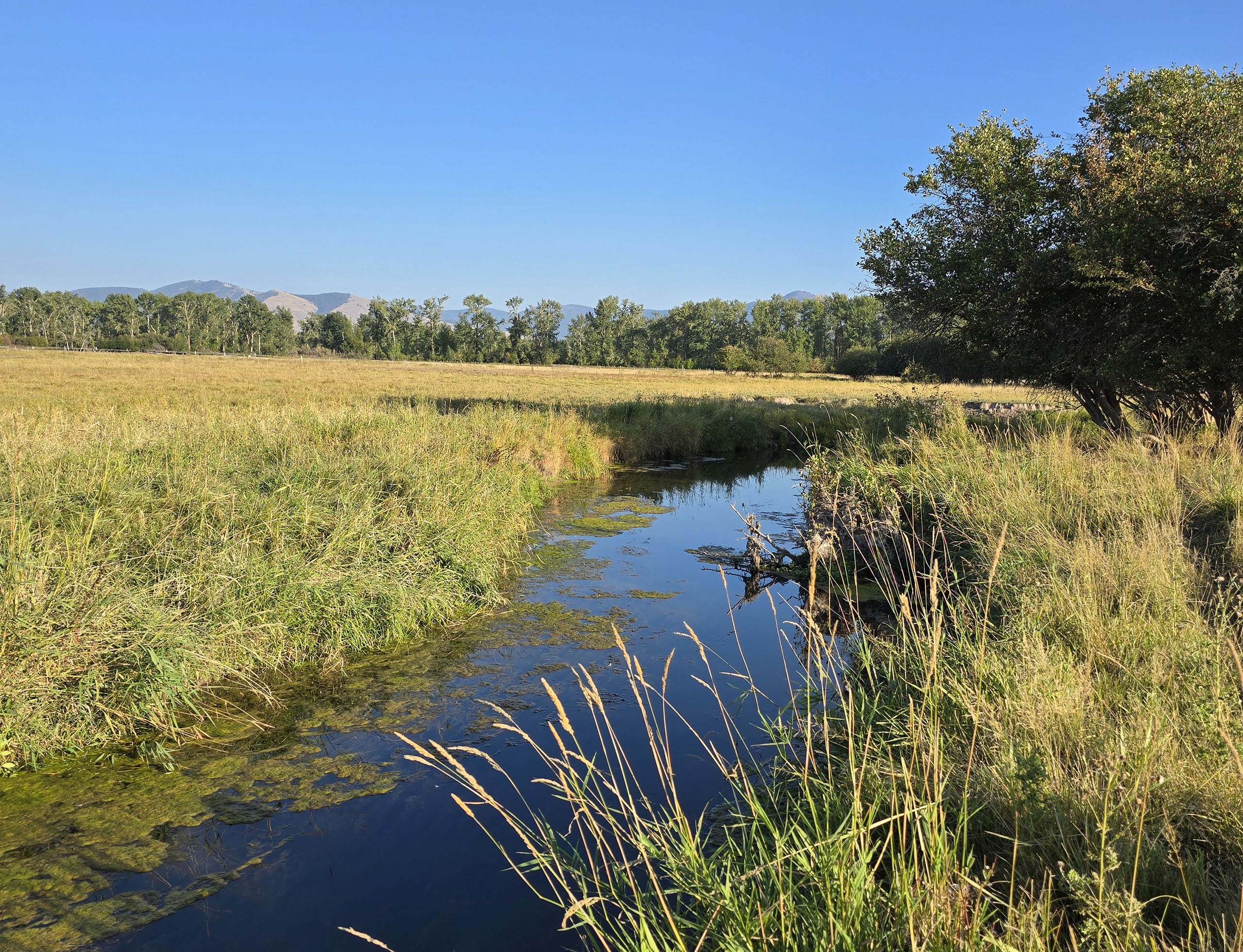
Grant Creek is a tributary of the Clark Fork River that originates high in the Rattlesnake Wilderness and then flows through the heart of Missoula, Montana’s rapidly expanding suburban footprint before traversing through contemporary ranchland to its confluence with the Clark Fork. The Creek is colloquially referred to as Missoula’s “forgotten wilderness stream,” a diverse and regionally important tributary home to genetically pure westslope cutthroat trout and federally threatened bull trout. Grant Creek’s geographic position combined with historic land uses and accelerating development fragments its pristine and ecologically intact headwaters from the hydrologically important floodplains in its lower reaches near the Clark Fork River at the Kelly Island Complex. Within these lower reaches, the floodplain is disconnected from the creek from nearly a century of heavy grazing, sedimentation, erosion, incising, and channel entrenchment (see Figure 1). Woody riparian vegetation is sparse, and the existing plant community reflects prolonged degradation and reduced hydrologic function. Aquatic habitat within these lower reaches is simplified, lacking the structural complexity and cover typically provided by large wood, diverse channel forms, and well‑vegetated banks. The dominant vegetation is reed canarygrass (Phalaris arundinacea), which is a non-native Facultative Wetland (FACW) species, indicating that the reach is typically associated with wetland hydrology; however, hydric soils were only observed in the portion of the reach that has not been grazed, reflecting the influence of grazing on soil development and wetland expression.
Phase 1 of the Lower Grant Creek Restoration will restore stream and floodplain connection that will expand existing wetlands and provide a substantial functional lift by restoring floodplain hydrology, excluding livestock, and establishing diverse riparian vegetation. The entire project area will be fenced to eliminate grazing pressure, allowing soils and vegetation to recover naturally. Floodplain lowering and reconnection will increase the duration and extent of seasonal saturation, creating conditions suitable for wetland development. Through targeted planting and construction of a new creek corridor, the project will establish approximately 1.28 acres of scrub‑shrub wetland and 3.74 acres of emergent wetland, resulting in a significant increase in wetland area, structure, and ecological function across the restored reach. The stream channel will go from a wide-flat Rosgen Type F stream to a Rosgen Type C4c/E4, increasing sinuosity to 1.8 and connecting the floodplain for scrub-shrub and emergent wetland vegetation growth. Project designs are finalized and a contractor has been selected. Construction will be completed in fall 2026. We will be looking for volunteers to help collect willow and plant trees in October.
This project is part of a larger watershed restoration plan and strategy developed in 2024 and 2025 in partnership with the Grant Creek Working Group, City and County of Missoula, and The Missoula Conservation District. River Design group now SWCA designed the restoration happening this summer.
View the Grant Creek Restoration Plan View the Vision and Strategy for Restoring Grant CreekWith new, intensive development happening along its lower reaches, the future of Grant Creek depends on community investment in the creek’s rich cultural and ecological functions before it’s too late. Right now, we have an amazing opportunity for holistic, headwaters-to-confluence restoration and protection of this native trout stream and wilderness corridor.
The goal of our Restore Grant Creek Campaign is to heal the creek where it has been harmed, re-naturalize it where it needs greater resilience, and protect it where its waters are still pristine.
Elsewhere in the Clark Fork watershed, we have seen the amazing recovery that’s possible when communities come together on behalf of the rivers they love. A community-driven Grant Creek restoration process can do the same by bringing people together to ensure the best possible future for our hardworking urban streams and the people, fish, and wildlife they sustain.
A Rich and Ancient History
To the Salish and Kootenai people its name is “Nɫɫq̓esuʔl̓m,” the “Little Wide Creek You Can Cross.” For millennia, it guided elders on their annual journey to the bitterroot-rich meadows of the Missoula valley. Much later, white settlers renamed it after Richard Grant, whose farm provided horses, cattle, and timber for the region’s miners, trappers, and builders. From its pristine beginnings in the Rattlesnake Wilderness, through its troubled traverse of commercial, residential, and agricultural lands, to its modest meeting with the Clark Fork River, Grant Creek embodies western Montana’s complex relationship with the waterways that define it.
The Grant Creek Working Group
The Grant Creek Working Group was established in 2022 by Clark Fork Coalition. It includes private and public stakeholders, landowners, development interests, and conservation allies to advise local government on creek projects. The group meets monthly to collaborate across the watershed on identifying core values and interests along with technical and ecological information.
In October of 2022, the group delivered recommendations for the project on Grant Creek at Horseshoe Bend to the City of Missoula Public Works Department. The recommendations emphasize the importance of transforming the existing narrow deep channel of lower Grant Creek into a broad natural floodplain which will store floodwaters, lower flood elevations and velocities, and provide the basis for all the other physical, ecological, and social benefits of a restored natural channel.
In October of 2023, the group finalized the Vision and Strategy for Restoring Grant Creek. This document outlines key goals and values for headwaters to confluence restoration. It then went to partners at the City of Missoula, Missoula County, and the Missoula Conservation District for review and approval.
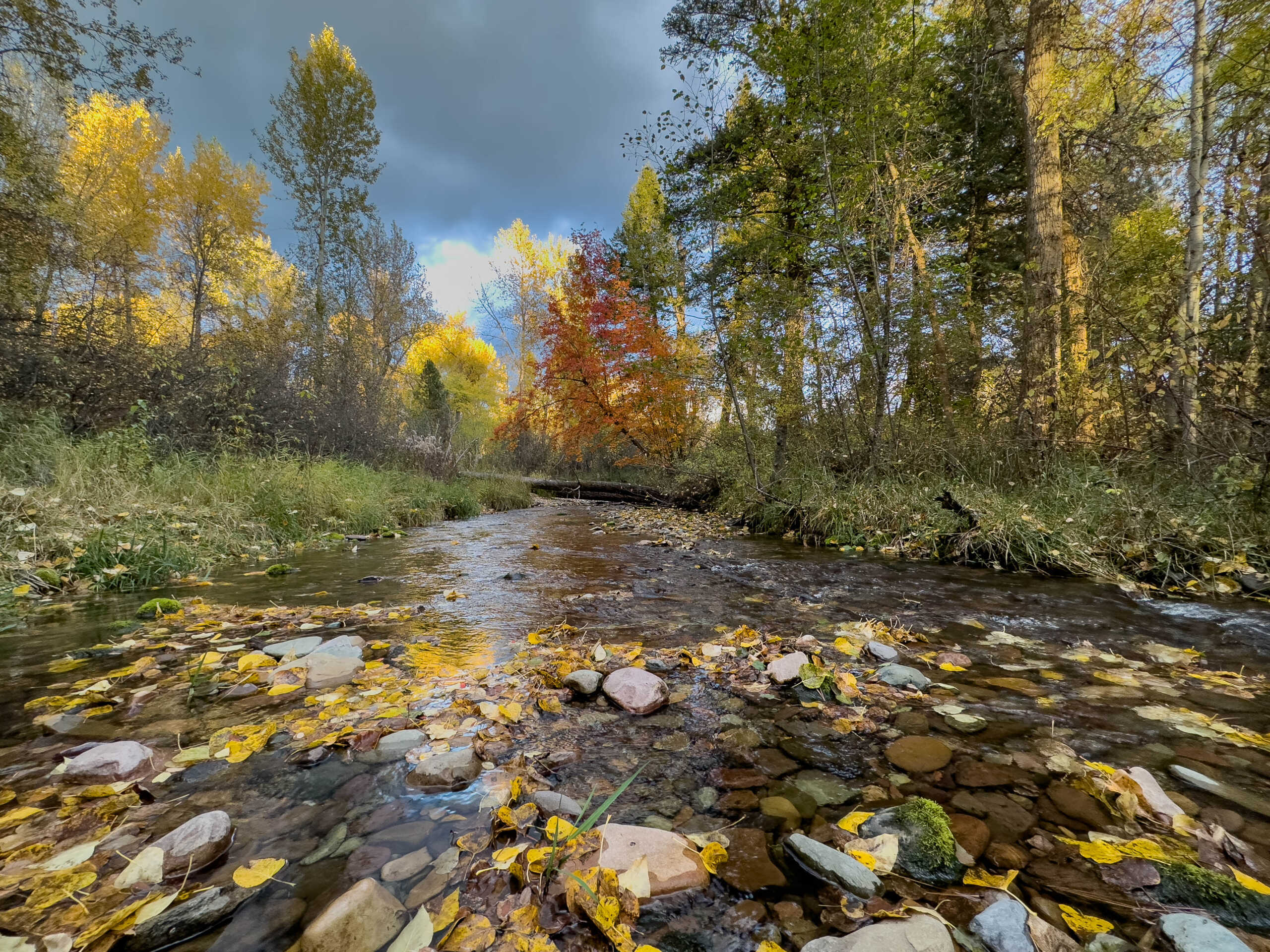
Your gift supports restoration, volunteer projects, community education, and more. Let’s restore Grant Creek and bring back Missoula’s forgotten wilderness creek.